
Works by St. St. Mokranjac Stevan Stojanović Mokranjac encompasses several musical areas. In the field of Vocal Music, Mokranjac writes works of secular and spiritual music, stage music for the needs of the theater, children's songs, solo songs on the verses of famous Serbian poets and some Serbian folk crafts. Instrumental music is 5. fugue as compulsory compositions in studies in which Mokranjac shows good knowledge of counterpoint, he composes for String Quartet.
Mokranjac was also engaged in melographic work and recorded folk songs from all South Slavic peoples. He also writes theoretical works on musical folklore. Mokranjac was also practically engaged in chamber music because he was one of the members of the first Serbian string quartet.
Бећ цy Мокрањчеви претходници y српској музици радо повезивали обрађене народне мелодије у „смеше“, „сплетове“, или – како Јосиф Маринковић назива своје композиције те врсте – „кола“. Но, тек са Мокрањцем тај музички род достиже своју зрелост, под поетичним именом Руковети, које ће постати синоним за заиста уметнички обрађен и органски јединствен хорски циклус народних песама. Милоје Милојевић вели да су Мокрањчеве Руковети „велике вокалне рапсодије“, „наше народне баладе и романсе“, а но Миленку Живковићу оне су „наш музички епос у коме су опевани наши људи и предели, наше нарави и обичаји, судбинска повезаност нашег човека за родну груду…“.
Петнаест Руковети, насталих у распону од четврт века (1883-1909), одражавају Мокрањчев развојни пут и све битне карактеристике његовог стваралачког лика. Узимајући за њих песме како из Србије у тадашњим границама – пре балканских ратова (што означава поднасловом Из моје домовине И-ВИ и ХШ руковет), тако и из Старе Србије (ВИИ, XИ), са Косова (ВИИИ, XИИ), из Црне Горе (ИX), Македоније (X, XВ), Босне (XИВ), а за Приморске напјеве из Хрватског приморја, Мокрањац је пружио доказе о ширини својих националних схватања.
Уметнички квалитети Руковети заснивају се на више чинилаца. Мокрањац, пре свега, бира песме са изразитим ритмичким и мелодијским профилом; код њега се, између осталог, први пут у нашој уметничкој музици појављују мешовити, несиметрични тактови, карактеристични нарочито за фолклор јужне Србије и Македоније. Трагајући за адекватним тумачењем латентних хармонских особина народних мелодија, он – нарочито у позним Руковетима – неретко замењује европеизовано дурско-молско схватање модалним решењима, укључујући и специфично осцилирање између два равноправна тонална центра. Иако је хорска фактура претежно хомофона, евидентна је брига за мелодијску линију сваког појединог гласа; као успели контраст делују местимичне нена-метљиве а ефектне канонске имитације. Уместо да – као већина његових претходника – све строфе једне песме обради на исти начин, Мокрањац радо примењује варирање у хармонизацији и хорској фактури, реалистички дочаравајући садржај (нпр. увођење солиста или смена мушког и женског хора као интерпретација дијалошких момената у тексту) и психолошки продубљујући израз. Најзад, док грађа неких раних Руковети (И, ИИИ, В) услед великог броја употребљених песама (до 10) делује донекле рапсодично, у каснијим се тај број ограничава на 4-5, а смишљен распоред контраста у њиховом темпу и карактеру не само да обезбеђује чврсту кохерентност целине, већ и буди асоцијације на инструменталне облике (сонатни или свитни циклус).
All Rukoveti was performed for the first time by Mokranjac himself, with the exception of the first one, with the Belgrade singing society; from the eleventh onwards, it regularly happened at a traditional concert on the eve of the New Year (13th). January in the new calendar.
И РУКОВЕТ (1883)
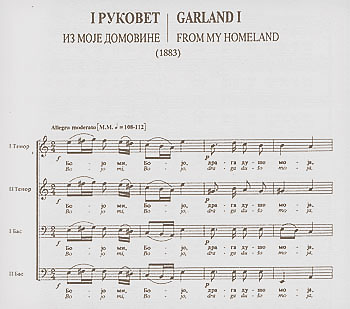 First hand (1883, first performed in 1884. with the choir "Kornelije Stanković") is the only one written in the original for the male choir. it gives away the exuberant temperament of the young author, but also the still incomplete mastery of the form in which he tries for the first time: the abundance of material (9 songs) goes to the detriment of the integrity of the form. However, mokranjac is trying to achieve an internal connection with multiple repetitions of certain songs, for which he had a role model in Marinkovic's car. Thus, the two stanzas of the first poem Bojo Mi, Bojo, given in a strong unison, frame the sung second bright sun, giving it the role of a gakva trio, and the reminiscences to the first and elegiac third poem What is it, Stano Mori (with a solo tenor) will appear later, before the final poem. The lively fourth Song Of The Caravan, Lana moje, already shows the typical Mokranjac gradation procedure through several stanzas, and the skercous sixth said velica is interesting for the consistent motivic implementation of the chorus "dude, OK" in the accompanying voices. In the duet of soloist-tenor and bass Protazilo Pembe Eishas, a somewhat stretched procedure was applied – the reverse Counterpoint procedure. Certainly, the most successful widely elaborated closing song was Baba, which not only brings an effective climax to the entire work, but also announces the future mastery of Mokranjac in using the possibilities of the choral ensemble.
ИИ РУКОВЕТ (1884)
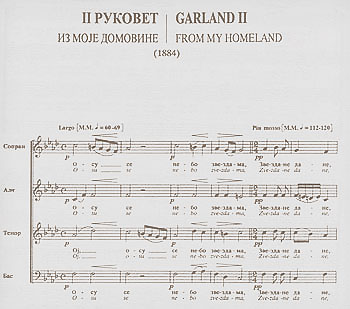 In contrast to the previous, Second hand (1884, прво извођење 23. фебруара 1889)
одликује се сажетошћу и економичношћу изражајних средстава.
Пет песама – све у ф-молл / Ф-дур – гради компактну целину
у пасторалном расположењу. Широко распеваној The sky of the stars
and love Smilj Smiljana the dynamic rise
in Is it You, Helen?after the baritone solo
Mario Resavkinjo the hand ends with a cheerful, humorous
song The Buda City.
In contrast to the previous, Second hand (1884, прво извођење 23. фебруара 1889)
одликује се сажетошћу и економичношћу изражајних средстава.
Пет песама – све у ф-молл / Ф-дур – гради компактну целину
у пасторалном расположењу. Широко распеваној The sky of the stars
and love Smilj Smiljana the dynamic rise
in Is it You, Helen?after the baritone solo
Mario Resavkinjo the hand ends with a cheerful, humorous
song The Buda City.
ИИИ РУКОВЕТ (1888)
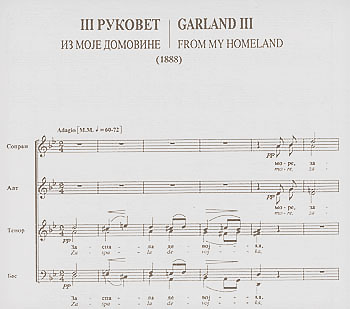 Although in volume (nine poems) and variety similar to the first,
The third hand (1888, first performance 16. January 1890)
it works more compactly thanks to the alternating arrangement of the stanzas of the two poems –
formally similar to Rhonda. The dialogue of the male and female choir
Sleeping girl, baritone -, bass-or middle-class solo in
Tekla water Tekelija, as well as the dark color Alto in
My pregnant mother got sick. they provide a rich sound palette.
The fourth and fifth songs are intertwined, in the fourth the Mokranjac
"orchestral" contratempo, while the sixth Oh My God, Nino. and final
This is how the House runs the sevdalian solo tenor
Chimbirchice skercozna You have eyes. The final round
(„I dance, I sing, I like it“) неочекивано успоравање Ларго
(„No one knows how I feel") reveals a deeper subtext.
Although in volume (nine poems) and variety similar to the first,
The third hand (1888, first performance 16. January 1890)
it works more compactly thanks to the alternating arrangement of the stanzas of the two poems –
formally similar to Rhonda. The dialogue of the male and female choir
Sleeping girl, baritone -, bass-or middle-class solo in
Tekla water Tekelija, as well as the dark color Alto in
My pregnant mother got sick. they provide a rich sound palette.
The fourth and fifth songs are intertwined, in the fourth the Mokranjac
"orchestral" contratempo, while the sixth Oh My God, Nino. and final
This is how the House runs the sevdalian solo tenor
Chimbirchice skercozna You have eyes. The final round
(„I dance, I sing, I like it“) неочекивано успоравање Ларго
(„No one knows how I feel") reveals a deeper subtext.
ИВ РУКОВЕТ (1890)
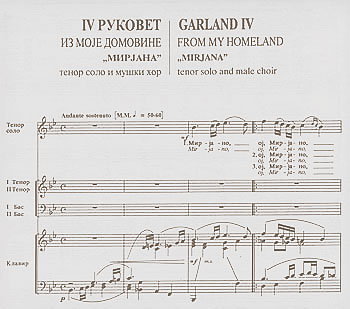 Despite the title, The fourth hand (1890,
the first 27. December of the same year) is not formally
right hand: contains only one song – Mirjano.
According to one interpretation, the refrain "La-La" represents the melody of another
songs, so it would be about varjanta Ronda А Б А Б А.
Постоје три верзије – за соло-бас и мешовити хор (Е-дур), за
соло-тенор и мушки хор (Б-дур) и за соло-тенор и мешовити хор
(Х-дур). Ово је једина руковет са инструменталном пратњом
(клавир + кастањете у рефрену). Чежњиво-страсна солистичка мелодија
и 5/4 такт рефрена откривају снажан утицај оријентализованог
градског фолклора јужних крајева.
Despite the title, The fourth hand (1890,
the first 27. December of the same year) is not formally
right hand: contains only one song – Mirjano.
According to one interpretation, the refrain "La-La" represents the melody of another
songs, so it would be about varjanta Ronda А Б А Б А.
Постоје три верзије – за соло-бас и мешовити хор (Е-дур), за
соло-тенор и мушки хор (Б-дур) и за соло-тенор и мешовити хор
(Х-дур). Ово је једина руковет са инструменталном пратњом
(клавир + кастањете у рефрену). Чежњиво-страсна солистичка мелодија
и 5/4 такт рефрена откривају снажан утицај оријентализованог
градског фолклора јужних крајева.
В РУКОВЕТ (1892)
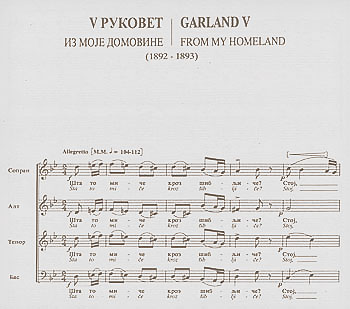 The greatest of all (ten songs), Fifth hand
(1892, прво извођење 4. маја 1893) представља први врхунац
Мокрањчеве световне музике. И поред разноликости материјала, целина делује
компактно захваљујући тематској хомогености, преплитању песама (нпр.
What is moving and What are you, or Oh, girl. and
Višnjičica), as well as gradation stanzas. The service of characterization
the characters are soloists ' dialogues (e.g. soprano and tenor
Horse saddle) or choral groups (e.g. Oh, by the mountain and
final Come on, mom.). Gradation through horska invoice
processing we find in She brought foodin the sixth song
Lele Stano Mori we are experiencing a gradual dramatic culmination
- from a one-voice beginning to a six-voice peak-what is this attitude
one of the most impressive in the whole handwriting.
The greatest of all (ten songs), Fifth hand
(1892, прво извођење 4. маја 1893) представља први врхунац
Мокрањчеве световне музике. И поред разноликости материјала, целина делује
компактно захваљујући тематској хомогености, преплитању песама (нпр.
What is moving and What are you, or Oh, girl. and
Višnjičica), as well as gradation stanzas. The service of characterization
the characters are soloists ' dialogues (e.g. soprano and tenor
Horse saddle) or choral groups (e.g. Oh, by the mountain and
final Come on, mom.). Gradation through horska invoice
processing we find in She brought foodin the sixth song
Lele Stano Mori we are experiencing a gradual dramatic culmination
- from a one-voice beginning to a six-voice peak-what is this attitude
one of the most impressive in the whole handwriting.
ВИ РУКОВЕТ (1892)
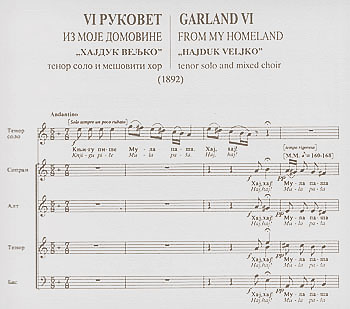 At the same time as the fifth, Mokranjac wrote and The sixth hand (1892),
inspired by heroic poems about Hajduk Veljko, whose works and death are related to the Mokranjac Homeland – Krajina and Negotin.
The first performance was on the occasion of the unveiling of the monument to Hajduk Veljko in Negotin, 13. July 1892. years.
Opening song The book is written by Mullah Pasha, a heroic ballad, entrusted to a solo tenor with echoes of the choir
who repeat his words (the male version is much more extensive). The lyrical scene
I grew an almond treeone of the best in the whole cycle. After two short episodes,
final I'm sick of Kara Mustafa sounds like an anthem to the Krajina hero, with a powerful
but inwardly discerned choral processing.
At the same time as the fifth, Mokranjac wrote and The sixth hand (1892),
inspired by heroic poems about Hajduk Veljko, whose works and death are related to the Mokranjac Homeland – Krajina and Negotin.
The first performance was on the occasion of the unveiling of the monument to Hajduk Veljko in Negotin, 13. July 1892. years.
Opening song The book is written by Mullah Pasha, a heroic ballad, entrusted to a solo tenor with echoes of the choir
who repeat his words (the male version is much more extensive). The lyrical scene
I grew an almond treeone of the best in the whole cycle. After two short episodes,
final I'm sick of Kara Mustafa sounds like an anthem to the Krajina hero, with a powerful
but inwardly discerned choral processing.
ВИИ РУКОВЕТ (1894)
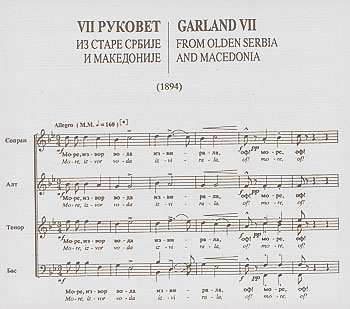 The seventh hand (1894), first performed 20. December of the same year in Budapest,
wear a subtitle Songs from old Serbia and Macedonia. The tendency towards conciseness of form, started
in Otherit becomes a rule here. Five songs are arranged so that after two live –
take-off The sea, the source of water and cheerful Who you buy - pace decreases
short but strong chorus What's wrong with me?. The witty skerco See grandfather,
with effective division by groups, and final round Cheat Danke, изграђено скоро у потпуности
на оргелпункту, чиме се призива звук гајди. Након енергичног финала, руковет завршава у пианиссиму.
(У рукопису Мокрањца стоји напомена да у See grandfather the first eight should be
extensions, which practically gives measure 7/16 instead of 3/8).
The seventh hand (1894), first performed 20. December of the same year in Budapest,
wear a subtitle Songs from old Serbia and Macedonia. The tendency towards conciseness of form, started
in Otherit becomes a rule here. Five songs are arranged so that after two live –
take-off The sea, the source of water and cheerful Who you buy - pace decreases
short but strong chorus What's wrong with me?. The witty skerco See grandfather,
with effective division by groups, and final round Cheat Danke, изграђено скоро у потпуности
на оргелпункту, чиме се призива звук гајди. Након енергичног финала, руковет завршава у пианиссиму.
(У рукопису Мокрањца стоји напомена да у See grandfather the first eight should be
extensions, which practically gives measure 7/16 instead of 3/8).
ВИИИ РУКОВЕТ (1896)
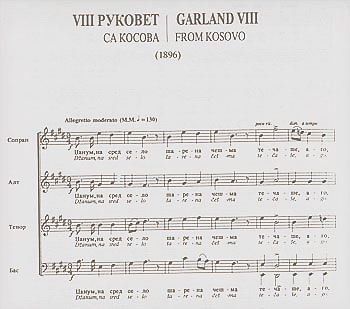 The eighth hand (1896), first performed 6. November of the same year,
it is based on melodies recorded by Mokranjac in Kosovo. Although small in size,
it is formally very balanced and resembles a miniature Sonata cycle. Lively and rhythmically stressed
the first song Janum in the middle of the village, with Canonical effect in the third stanza, is opposed by
melancholic What must the murmur flowshe also has tragic accents. The Lilac branch
it acts as a skerco in the structure, while Jump ' round it conjures up the final image of the car disappearing like an echo in the distance.
The eighth hand (1896), first performed 6. November of the same year,
it is based on melodies recorded by Mokranjac in Kosovo. Although small in size,
it is formally very balanced and resembles a miniature Sonata cycle. Lively and rhythmically stressed
the first song Janum in the middle of the village, with Canonical effect in the third stanza, is opposed by
melancholic What must the murmur flowshe also has tragic accents. The Lilac branch
it acts as a skerco in the structure, while Jump ' round it conjures up the final image of the car disappearing like an echo in the distance.
ИX РУКОВЕТ (1896)
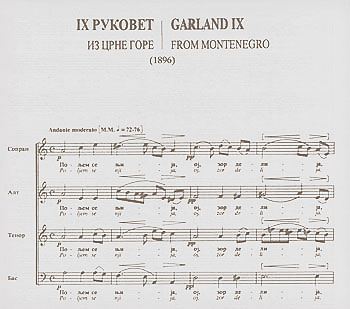 In The ninth hand (1896) four songs from Montenegro were combined. Except
widely sung first Senji field, all the rest are short, concise and melodiously narrow — which is
characteristic of the folklore of that end. This is why they are extremely intense and require a simple
it's also an unusual harmonic solution. The archaic Call of odishu Rosa knits Russian hair and
Hunting citizensuntil it is finished Ivan the master with unusual harmony and
melodic range of all Terce. The harmonization comes from the Czech mellographer Ludwik Kuba.
In The ninth hand (1896) four songs from Montenegro were combined. Except
widely sung first Senji field, all the rest are short, concise and melodiously narrow — which is
characteristic of the folklore of that end. This is why they are extremely intense and require a simple
it's also an unusual harmonic solution. The archaic Call of odishu Rosa knits Russian hair and
Hunting citizensuntil it is finished Ivan the master with unusual harmony and
melodic range of all Terce. The harmonization comes from the Czech mellographer Ludwik Kuba.
X RUKOVET (1902)
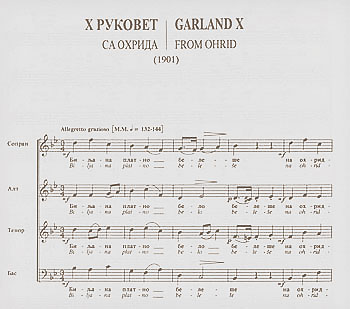 The peak of artistic maturity is Uranjak in 1902. written by The tenth handwhich uz
Kozara it represents his most successful worldly work. Based on Ohrid songs, she
it stands out with a purified harmonic expression, modal solutions and classical form. The first song
Biljana canvas notes осцилира између Б-дура и г-молла, украшена канонском имитацијом и
прозрачним вокалним комбинацијама. Болна Up to three guns, robust Dinka Dvori meta,
miRNA Shoot me and temperamental Sprouting flowers round this arm as
a masterpiece of Serbian choral literature.
The peak of artistic maturity is Uranjak in 1902. written by The tenth handwhich uz
Kozara it represents his most successful worldly work. Based on Ohrid songs, she
it stands out with a purified harmonic expression, modal solutions and classical form. The first song
Biljana canvas notes осцилира између Б-дура и г-молла, украшена канонском имитацијом и
прозрачним вокалним комбинацијама. Болна Up to three guns, robust Dinka Dvori meta,
miRNA Shoot me and temperamental Sprouting flowers round this arm as
a masterpiece of Serbian choral literature.
XИ РУКОВЕТ (1905)
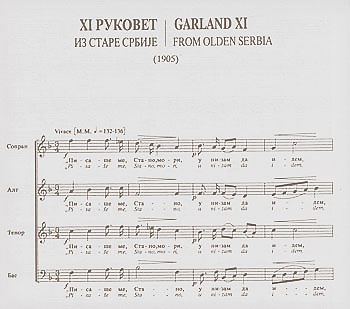 Designated as Songs from old Serbia, The eleventh hand (1905, прво извођење 13. јануара 1906)
формално подсећа на Осму, по структури Аллегро – Адагио – Сцхерзо – Финале. Отвара је He wrote to me, Stano Mori,
with a dialogue of male and female choir. Follow the emotional Black Mountainwhich Peter used later in his life.
opera Kostan. Third song, rhythmic Oy, Lenko, Lenkoin the form of dialogue, she is enriched by speeches in the women's choir.
Final round Calugere, black baby доноси енергичан финале и довршава руковет у Ф-дуру.
Designated as Songs from old Serbia, The eleventh hand (1905, прво извођење 13. јануара 1906)
формално подсећа на Осму, по структури Аллегро – Адагио – Сцхерзо – Финале. Отвара је He wrote to me, Stano Mori,
with a dialogue of male and female choir. Follow the emotional Black Mountainwhich Peter used later in his life.
opera Kostan. Third song, rhythmic Oy, Lenko, Lenkoin the form of dialogue, she is enriched by speeches in the women's choir.
Final round Calugere, black baby доноси енергичан финале и довршава руковет у Ф-дуру.
XИИ РУКОВЕТ (1906)
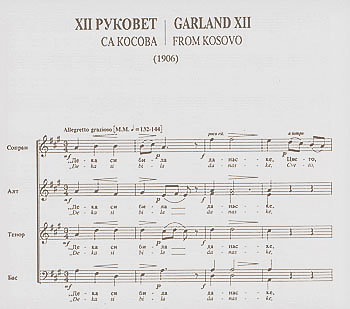 Predominantly lyrical by content, The twelfth hand (1906, first performance 13. January 1907) includes songs from Kosovo.
It stands out Cafnalo flowers, remarkable for purity of melody and aeolian harmonization, with a beginning that begins
solo-soprano and tenor before the choir performs. she is preceded by three songs: lively You were a grandfather, then Aman, you walked,
full of hidden sensuality, and rhythmically expressive I don't have one, Janum., with an extended melodic range.
The final brings Sit mom at a lively, slow pace.
Predominantly lyrical by content, The twelfth hand (1906, first performance 13. January 1907) includes songs from Kosovo.
It stands out Cafnalo flowers, remarkable for purity of melody and aeolian harmonization, with a beginning that begins
solo-soprano and tenor before the choir performs. she is preceded by three songs: lively You were a grandfather, then Aman, you walked,
full of hidden sensuality, and rhythmically expressive I don't have one, Janum., with an extended melodic range.
The final brings Sit mom at a lively, slow pace.
XИИИ РУКОВЕТ (1907)
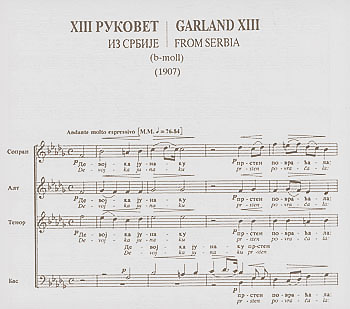 The thirteenth hand (1907, први пут изведена 13. јануара 1908) Мокрањац се вратио мелодијама из своје уже домовине.
Постоје две верзије ове руковети, које се разликују у почетном тоналитету (б-молл и а-молл), као и у обради и распореду. Руковет прати темпоралну структуру сличну барокној сонати – две лагане и две живље песме.
Суморна The hero's ring vomited opens the hand, followed by a vivid Oh my god, little Momo.and then Lyra. Celebrate the chickenand cheerful A new car, a new car, with humorous onomatopoeia.
The thirteenth hand (1907, први пут изведена 13. јануара 1908) Мокрањац се вратио мелодијама из своје уже домовине.
Постоје две верзије ове руковети, које се разликују у почетном тоналитету (б-молл и а-молл), као и у обради и распореду. Руковет прати темпоралну структуру сличну барокној сонати – две лагане и две живље песме.
Суморна The hero's ring vomited opens the hand, followed by a vivid Oh my god, little Momo.and then Lyra. Celebrate the chickenand cheerful A new car, a new car, with humorous onomatopoeia.
XИВ РУКОВЕТ (1908)
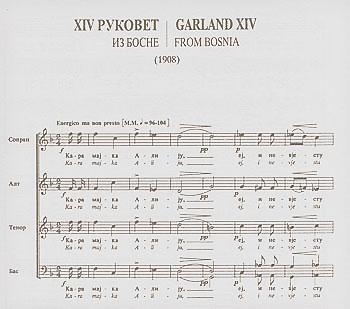 The Fourteenth hand (1908, first performance 13. January 1909) brought songs from Bosnian urban folklore, recognizable by melodic width and melismatics. The first song Kara mother Ali it has the character of a ballad with a strong introduction. Melancholy and richly harmonized Every tree in the forestas well as colorful Girl screaming in the third paragraph. The fourth song What Nomi the grass blurred it is characterized by large melodic amplitude and strong homophonic expression. The last song It is a green pine it combines a light introduction with a lively central motif, building a sonic and rhythmic contrast. The common melodic or rhythmic lines between most songs contribute to the impression of a complete cycle.
XВ РУКОВЕТ (1909)
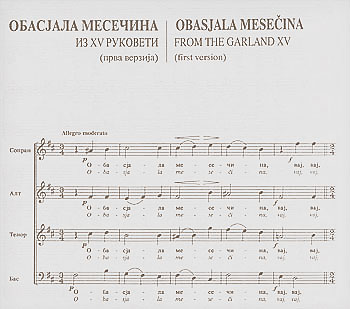 The fifteenth hand (1909, first performance 13. January 1910) includes songs from Macedonia, similar to the tenth.
In elegiac Mary, White Mary it is dominated by fine harmonic polyphony and lively rhythmic narration. Moonlight it has the character of a skerz with metric changes and outlines of the Rondo.
God to kill him it is characterized by a five-membered rhythm, and Walk, mother, nine years old it brings an oriental atmosphere through tenor solo.
The final song Sejala Dinka bosiljak it uses canonical imitation and ends with an effective final.
It is accompanied by Mokranjac's note that "the last eighth in each measure is slightly prolonged", indicating a specific Macedonian rhythm.
The fifteenth hand (1909, first performance 13. January 1910) includes songs from Macedonia, similar to the tenth.
In elegiac Mary, White Mary it is dominated by fine harmonic polyphony and lively rhythmic narration. Moonlight it has the character of a skerz with metric changes and outlines of the Rondo.
God to kill him it is characterized by a five-membered rhythm, and Walk, mother, nine years old it brings an oriental atmosphere through tenor solo.
The final song Sejala Dinka bosiljak it uses canonical imitation and ends with an effective final.
It is accompanied by Mokranjac's note that "the last eighth in each measure is slightly prolonged", indicating a specific Macedonian rhythm.
По свом облику руковетима потпуно одговарају и Приморски напјеви, састављени од песама које је под истим насловом раније обрадио Славољуб Лжичар. Светле, ведре дурске мелодије медитсранског типа и звонак хорски став чине основну карактеристику композиције, састављене од осам песама. За једноставном, уздржаном Возила се шајка, мала барка следе Збогом, нехарна душо, у ритму лагане баркароле у Попухнул је тихи вјетар, са солистичким „запевима“ на почетку строфа. AJ Green, Green is conceived in the dialogue of female and male voices, and introduces into the pastoral OJ, Jelena, water you ice, and then Zibali Jane with her almost orchestral invoice marks the first peak in the course of the form. The second culmination, after the gentle, lyrical vrbnica pad morem, will be brought by the dynamic closing song Majka Maru across the sea called, partially canonically processed, and round the whole with a basic tonality with a great FIS-Dur.
PRIMORSKY NAPYEVI Download Text | DOWNLOAD NOTES
In addition to the tenth hand, choral skerco Kozar обележава највиши домет Мокрањчевог стваралаштва. Но, док се у Руковетима радило о хармонизовању постојећих мелодија, премда на високом ступњу уметничке стилизације, овде су мелодијски мотиви двеју народних песама (Циганчица и Крај Вардара стајаше) слободно разрађени и, с новим текстом (који вероватно потиче од Милована Глишића), стопљени снагом ауторове оригиналне инвенције у изванредно успелу целину. Та чињеница – уз формалну јасноћу, мелодијску пластичност, хармонску и контрапунктску занимљивост, као и рељефно, реалистичко сликање ситуације, – даје Козару посебно место нс само у Мокрањчевом опусу већ и у целој српској хорској литератури.
From the introductory quarter invitation "ERDs, de!“ the first thematic element is developed, imitated in a manner reminiscent of a double fugue. The second element is related to the first in rhythm, but contrasts it with its Duric lighting. The introduction and both thematic elements are repeated, as if the form would be made strophically, but the continuation is different: a small peasant who is most loved to keep goats slipped one goat from a height and was killed. Dramatic climax, achieved by chromatic sequence on words "le, le, le"it is not necessary, of course, to take it too seriously, as the shepherd's sorrowful "Ci, Ci, goat", given in the form of a canon; by reminiscing on another thematic element, in major, the joyfully sad story ends.
Kozar Download Text | DOWNLOAD NOTES
Од своје замисли о компоновању осам литургија (но мотивима свих осам гласова православног црквеног појања), Мокрањац је потпуно остварио само Литургију но И гласу, чији оригинални наслов гласи Божественаја служба Цв. Јована Златоустог. Made according to folk spiritual melodies,it testifies to the author's ability to tastefully stylise and shape these songs; the way of their harmonization, with the extensive use of the chords of the secondary stages, gives an archaic and at the same time our Slavic overtone, while the application of polyphonic details has achieved the expressiveness of the melodic line in every voice. За мирним, хомофоним почетним Свјати Боже и једноставно хармонизованим респонѕоријалним репликама које следе иза Алилуја, долази најразрађенији и најсадржајнији став литургије, достојанствена Херувимска Песма (Иже херувими), у којој се најбоље огледају све горе поменуте одлике Мокрањчевог начина обраде.
Кратки лапидарни ставови Отца у сина, Достојно и праведно и Свјат слични су међусобно по мотивском материјалу и чисто хомофоној фактури, док се два следећа: Тебе појем (са успелим контрастом који у средњем делу уноси мека звучност соло-квартета) и Достојно јест одликују широм разрадом и мелодијски богатије изатканом хорском фактуром. После новог низа хорских одговора у респонзоријалном маниру и кратког Једини свјат, сродног малопређашњим хомогоним одељцима, развија сс обимни Причастен (Хвалите Госнода), израђсн у свом другом делу у виду натпевања соло и тути-група. Језгровити Благословен Грјадиј, Видјехом свјат и Да исполњатеја чине целину, за којом ведри, покретни, умерено полифони став Буди имја Господње завршава литургију светлим Еф-дуром.
Своје Друго опело у фис-молу, за мешовити хор, написао је Мокрањац поводом прославе Вука Караџића, када је први пут и изведено 20. септембра 1888. године. За разлику од већине његових духовних композиција, рађених мање или више стриктно на бази народних црквених напева, Опело је претежно оригинална замисао. Отуда овде пада у очи знатио веће хармонско и контрапунктско богатство у поређсњу с другим Мокрањчевим композицијама насталим у том периоду (ране Руковети), где су латентне хармонске особине фолклора нужно сужавале избор срсдстава. Само понегде налазе се у Опелу елементи народне духовне музике, као у почетној тсми става Њест свјат, повереној басу. Имитационим наступима гласова развија се ванредно импресивна градација, да став најзад изумире у тихим акордима.
Следећи одсек Цо свјатими упокој отпочиње фугатом, да код речи "go “there is no fire, no fire, no fire." it brings chromatic-enharmonic chord connections unusual in Mokranjac's works, and on the "zhizan of Infinity" appears, as a free reprise, the theme of fugato transferred from the original Molsky to the irradiated Duric tonal genus. The soul or soul has a recitative character, and the ending of the Opel, Eternal Memory, frames the whole taking the thematic matsriyal from the beginning of the Lord Have Mercy.